

What are the main elevator parts?
Mar 10, 2026
Leave a message
Hey there! As an elevator parts supplier, I've spent a good deal of time getting to know all the ins and outs of elevator components. It's pretty fascinating stuff, and I'm excited to share some of the main elevator parts with you.
Let's start with the basics. Elevators are complex machines, and each part plays a crucial role in making sure they operate safely and efficiently. One of the most important parts is the hoistway. This is the vertical shaft where the elevator car moves up and down. It's like the highway for the elevator, and it needs to be well - constructed and maintained.
The elevator car is what we're all familiar with. It's the box that we step into to travel between floors. Inside the car, there are several key components. First off, there are the Elevator Car Doors. These doors are not just for show; they're designed to keep us safe. They have sensors that detect if something is in the way, preventing them from closing on a person or an object. The mechanism that opens and closes these doors is quite sophisticated. It has to be smooth and reliable, so that passengers can get in and out without any hassle.
Another vital part inside the elevator car is the control panel. This is where we press the buttons to select our desired floor. The control panel is connected to the elevator's brain, the controller. The controller is like the command center of the elevator. It receives signals from the control panel and decides which direction the elevator should go, when to stop, and how fast to move. It also communicates with other parts of the elevator system to ensure everything works in harmony.
Now, let's talk about the machinery that actually moves the elevator car up and down. The traction system is a common way to do this. It consists of a motor, a sheave (a large pulley), and steel ropes or belts. The motor powers the sheave, which rotates and pulls the ropes or belts, causing the elevator car to move. The motor needs to be powerful enough to lift the weight of the car and its passengers, but also efficient to save energy.
There are also counterweights in the traction system. These are heavy weights that are connected to the elevator car by the ropes or belts. The counterweight balances the weight of the car, reducing the amount of energy the motor needs to use. This is a clever design that helps make elevators more energy - efficient.
Moving on to the landing areas on each floor. The Landing Door Header is an important part here. It's located at the top of the landing door and provides support and guidance for the door. The landing doors are similar to the elevator car doors in that they need to open and close smoothly and safely. They also have interlocks that prevent them from opening when the elevator car is not at that floor. This is a crucial safety feature to prevent people from accidentally stepping into an empty hoistway.
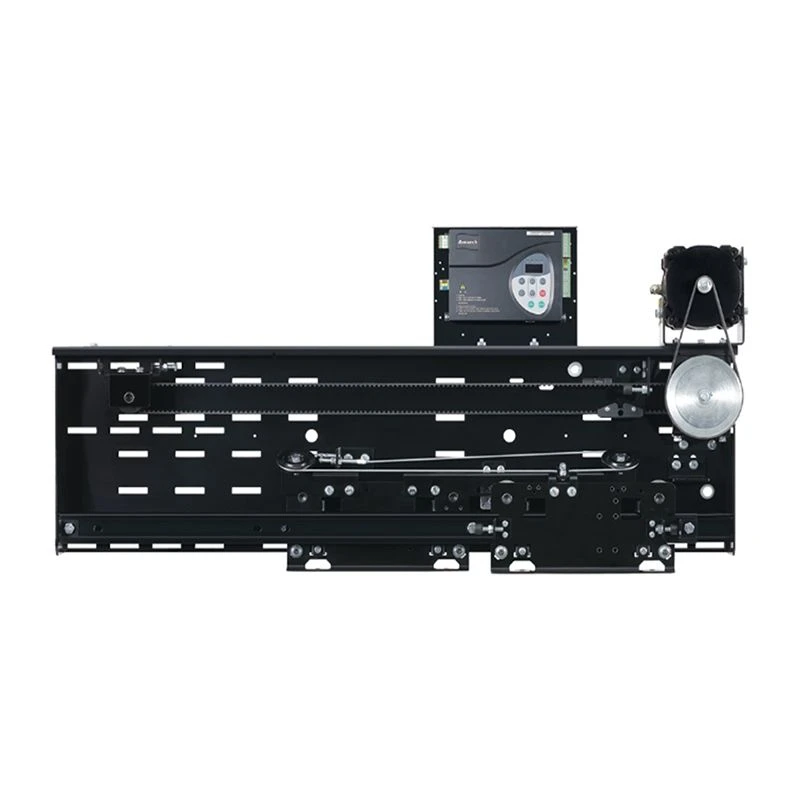
The elevator door motors are also a key component at the landing areas. The Elevator Door Motors are responsible for opening and closing the landing doors. They work in sync with the elevator car doors to ensure that passengers can enter and exit the elevator safely. These motors need to be durable and precise, as they are used multiple times a day.
Safety is a top priority in elevator design, and there are several safety devices in place. One of the most well - known is the safety brake. The safety brake is designed to stop the elevator car in case of an emergency, such as a broken rope or a malfunction in the traction system. It engages quickly and holds the car in place, preventing it from falling.
There are also overspeed governors. These devices monitor the speed of the elevator car. If the car starts to move too fast, the overspeed governor activates the safety brake. This is an extra layer of protection to ensure the safety of the passengers.
Another safety feature is the buffer. Buffers are located at the bottom of the hoistway. In the event that the elevator car falls to the bottom, the buffers absorb the impact, reducing the force of the landing and protecting the passengers.
The elevator's electrical system is also a critical part. It provides power to all the components, from the motors to the control panel. The electrical system includes wiring, switches, and transformers. It needs to be properly installed and maintained to prevent electrical failures, which could lead to elevator malfunctions.
Ventilation is also important in an elevator. There are ventilation systems that bring in fresh air and remove stale air from the elevator car. This helps keep the passengers comfortable during their journey, especially in a small enclosed space.
As an elevator parts supplier, I understand the importance of quality and reliability. Each part needs to be made to the highest standards to ensure the safety and performance of the elevator. Whether it's a small component like a sensor or a large part like the motor, every piece plays a role in the overall functionality of the elevator.

If you're in the market for elevator parts, whether you're an elevator installer, a maintenance technician, or a building owner, I'd love to talk to you. I can provide you with high - quality parts that meet your specific needs. We have a wide range of products, from the most common parts to hard - to - find components.
Don't hesitate to reach out and start a conversation. We can discuss your requirements, answer any questions you might have, and work together to find the best solutions for your elevator projects. Whether it's a small repair or a large - scale installation, we're here to support you.
References
- "Elevator Technology Handbook"
- Industry reports on elevator design and safety
So, that's a rundown of some of the main elevator parts. I hope this has given you a better understanding of how elevators work and the importance of each component. If you have any more questions, feel free to drop me a line!